At Bodylogics we feel it is important to understand the how and why your injury occured. We also feel it is equally important to share with you the stories of why our therapists chose this as their profession and to hear their stories of how they overcame their past injuries and how they use this experience to help you get better too.
This week our blog is produced by Monika Smiechowska – Sports Therapist and Injury Rehabilitation specialist at Bodylogics – who suffered a severe knee injury in 2017 and here she shares her very own story of her journey to get to where she is today.
The injury happened in early 2017, in France. My friends and I went on a ski trip. I was very excited to ski as I have not done it before. I thought the smart thing to do, is to book myself in for a few lessons to get comfortable on the slopes.
The morning of my first lesson I went over the basics with the instructor then proceeded to go on one of the slopes with my friends. About an hour into skiing, I fell awkwardly and jammed one of my skis in the snow – the ski didn’t unclip and pulled and twisted my leg as a result.
I knew it was bad....
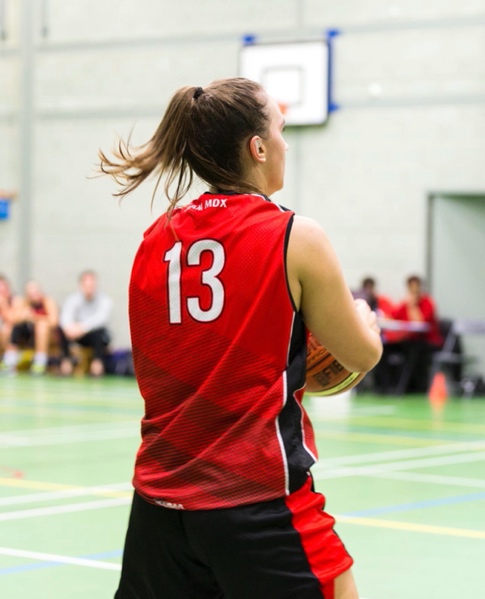
I knew straight away that the injury was bad, as the pain was unbearable and any slight movement to the knee joint caused agony. This was devastating as I am a basketball player and instantly knew that the season was over for me.
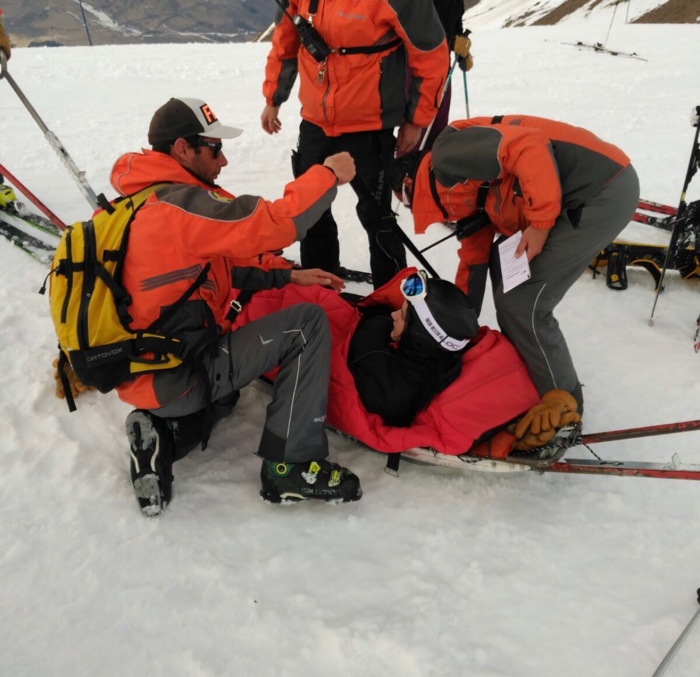
A bumpy sled ride and a helicopter ride later… I found myself in one of the trauma hospitals in the Alps.
How do I successfully rehabilitate my ankle?
The X-rays came back clear – woohoo no fractures! The MRI however showed a complete tear to the anterior cruciate (ACL) and medial collateral (MCL) ligaments.
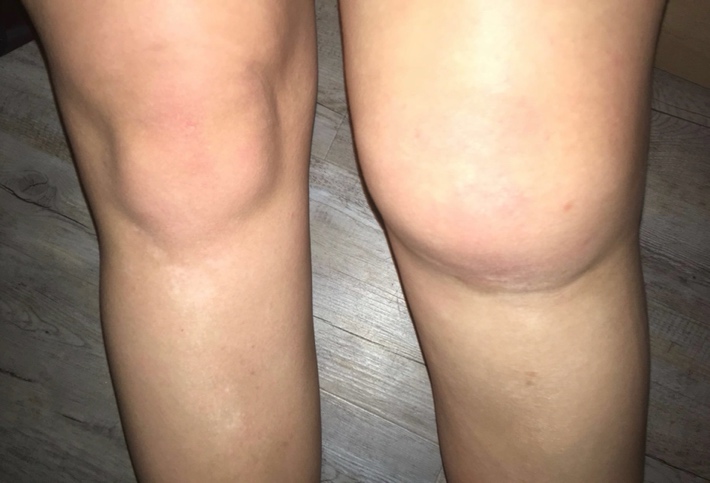
I didn’t realise how much my knee has swelled up until I took my ski gear off… it was massive! (scroll to see images)

Needless to say, I called my trip short and returned to London to continue with my orthopaedic journey…
1st operation
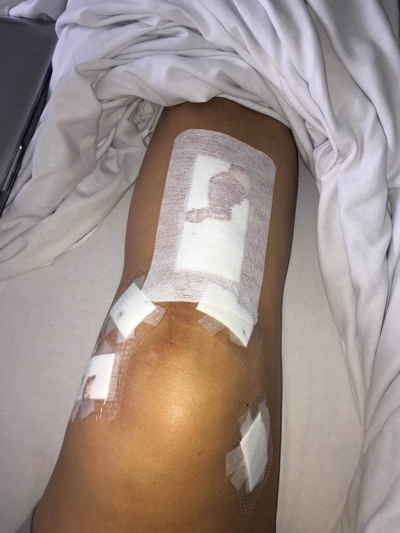
In October 2017 I had my first arthroscopic repair – which was a success, well I guess partly anyway… I say that as the orthopaedic surgeon did not repair the ruptured MCL, only the ACL using a graft from my gracilis muscle.
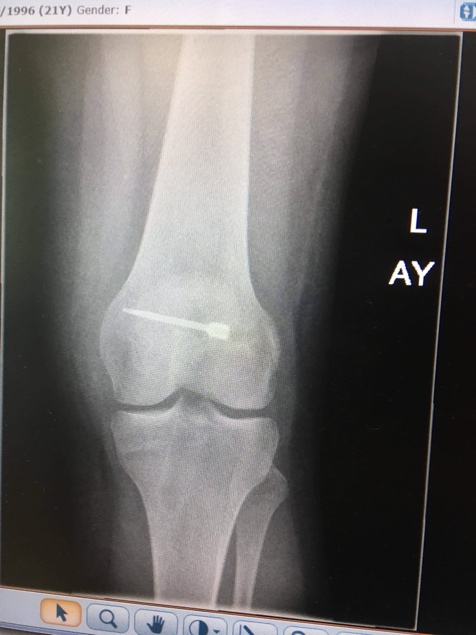
Initial rehabilitation aimed to reduce inflammation and regain full range of motion (particularly extension). I then moved on to more strength and proprioception based exercises. I was very lucky to be able to be seen twice a week by a professional.
After completing a full rehabilitation program and passing a series of plyometric and strength tests, I was cleared to return to playing basketball.
Something just didn't feel right.....
Although I felt the strongest, I have ever done before, the stability of my knee was questionable. During training and matches my knee would sometimes fall inwards causing a lot of pain and slight swelling the following day – I couldn’t help but think it was due to the fact that the MCL was not repaired in the first procedure.
Around 18 months after my first operation, I was referred for a second opinion to a different knee specialist, who was shocked that the MCL was not fixed in the first procedure. Following another MRI, he and I mutually decided to go for another arthroscopy to repair the ruptured ligament as the fibres did not reattach themselves.
2nd operation
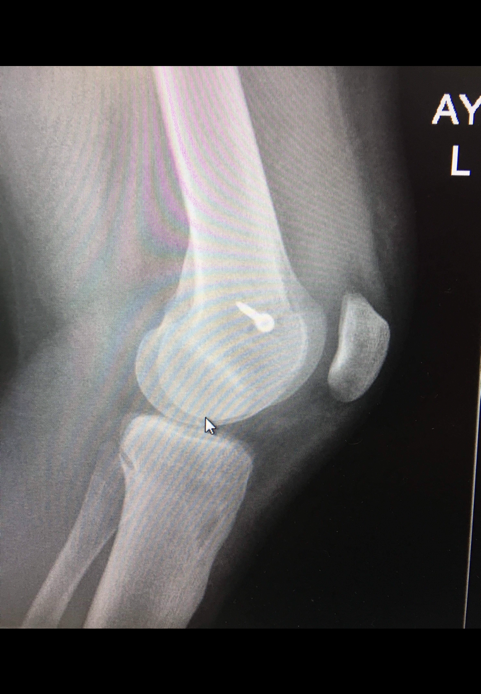
In November 2019 I had my second procedure which ended up being more complex and problematic than expected… The surgeon had to repair the previously repaired ACL due to laxity and the ruptured MCL. At the end of the procedure the screws got stuck and as a result of a forced extension, I sustained a femur fracture.
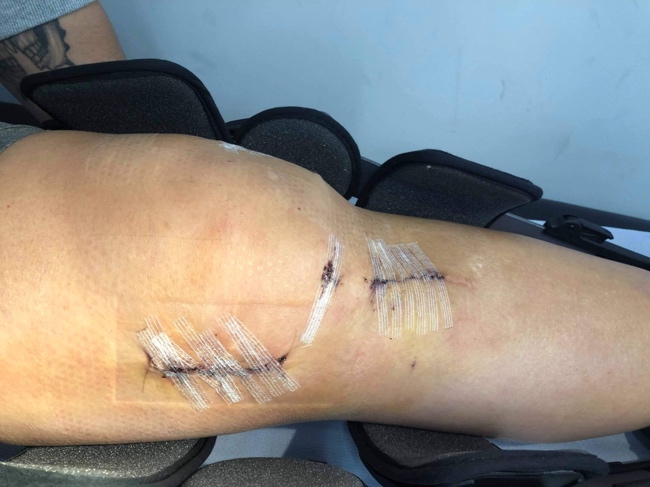
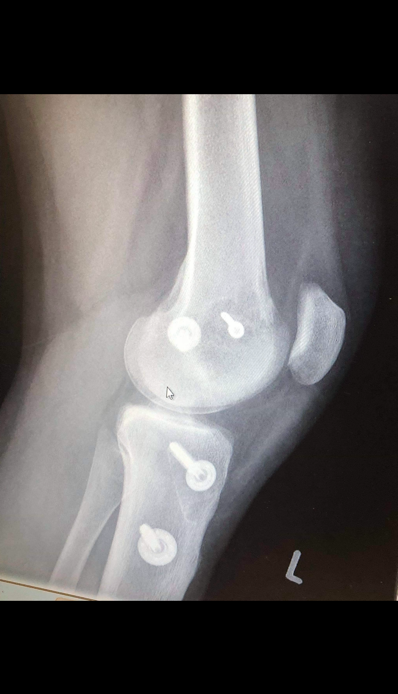

This time I was in a brace and on crutches for significantly longer than last time. Understandably, I had to allow the fracture to heal before I could proceed with any rehabilitation – this sadly set me back massively.
When finally able, I began my rehabilitation and after 12 months or so, I was able to return to playing basketball – just in time for the new season!
Future plans
My future plans are to continue developing strength and continue playing basketball.
My biggest take from this is understanding that rehabilitation is never straight forward.
It may be the case that you need to take a step back to then be able to take two steps forward. Good rehabilitation in the foundation of successful return to play.