


Always Active
Required for security, remembering your privacy choice, and core website features. These cannot be switched off.

Clinics in Barnet, Whetstone, Colindale & Winchmore Hill.
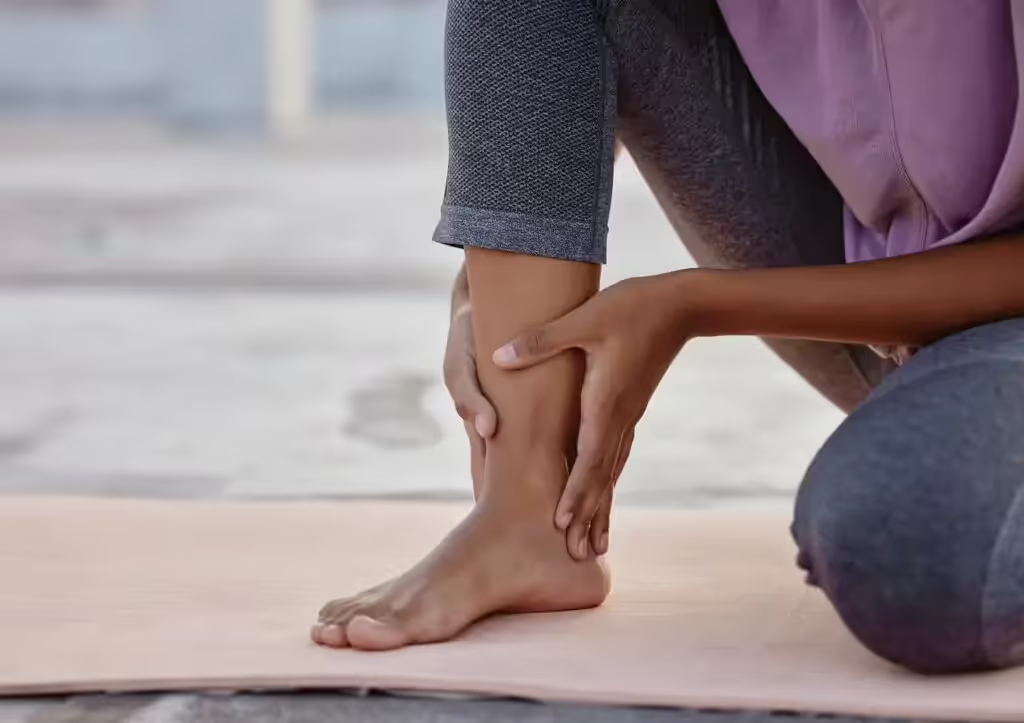
Book an AppointmentPain and stiffness at the back of the heel or lower calf can make walking, running and even standing uncomfortable. Our specialist physiotherapists treat Achilles tendinopathy across our four North London clinics.
The Achilles tendon takes an enormous load every time you push off your foot, so when it becomes irritated it needs the right kind of management to recover well. Our evidence-led, hands-on approach focuses on loading the tendon correctly so it heals and strengthens, rather than simply settling for a while.
If you are not happy after your first appointment, you are welcome to see another member of our team, completely free of charge.




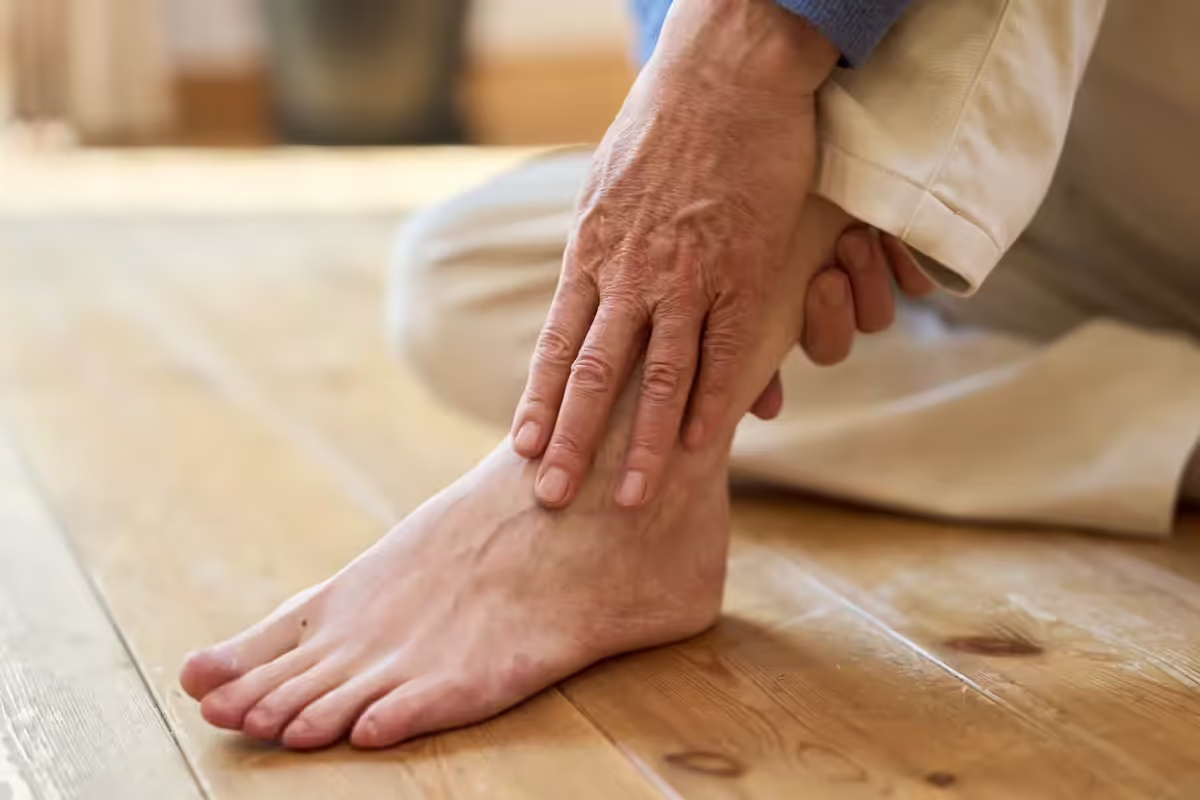
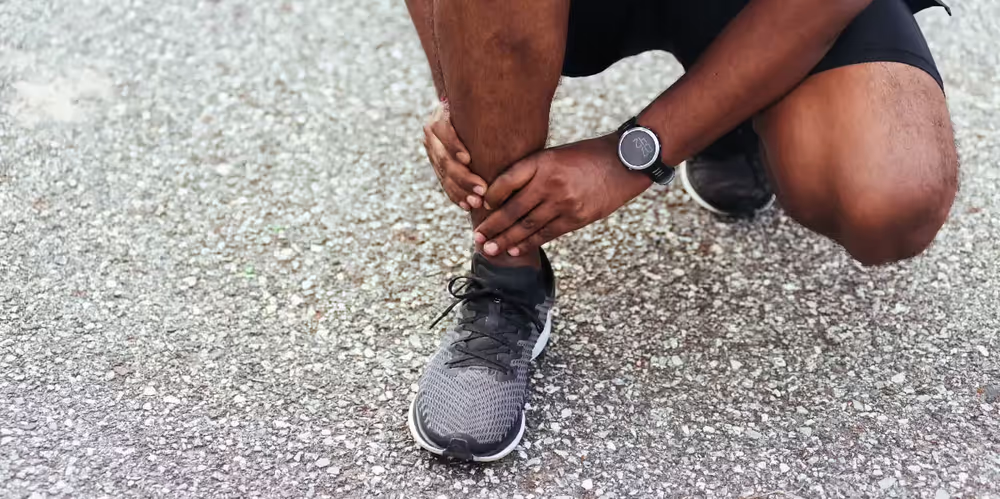
The Achilles tendon is the strong band of tissue that connects your calf muscles to your heel bone, and it is essential for walking, running and jumping. Achilles tendinopathy is the term for pain, swelling and reduced function in this tendon, usually as a result of it being loaded more than it can cope with.
Rather than being a simple case of inflammation, tendinopathy is now understood as a failed healing response within the tendon, where the tissue struggles to adapt to the demands placed on it. This understanding matters, because it shapes how the condition is best treated.
Achilles tendinopathy usually develops when the load on the tendon outpaces its ability to recover. Common contributing factors we see include:
The condition tends to produce a recognisable pattern of symptoms, which may include:
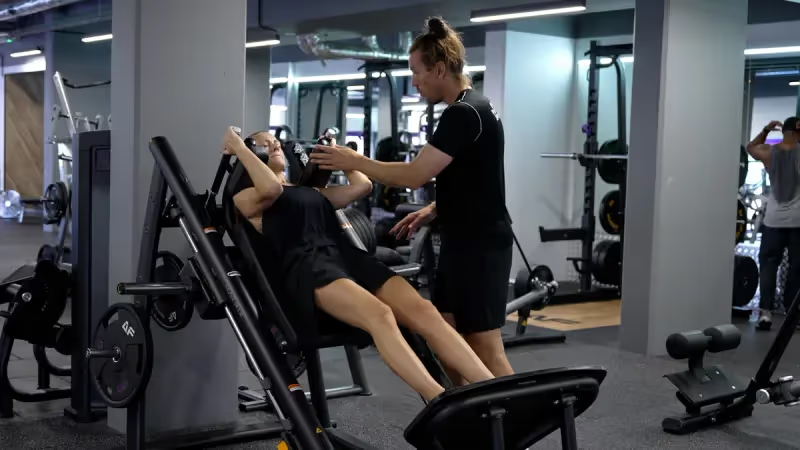
Successful treatment of Achilles tendinopathy is built around loading the tendon in a controlled, progressive way. Rest alone rarely solves the problem, because the tendon needs the right stimulus to rebuild its strength and capacity. Our physiotherapists design a structured loading programme tailored to the stage and severity of your condition.
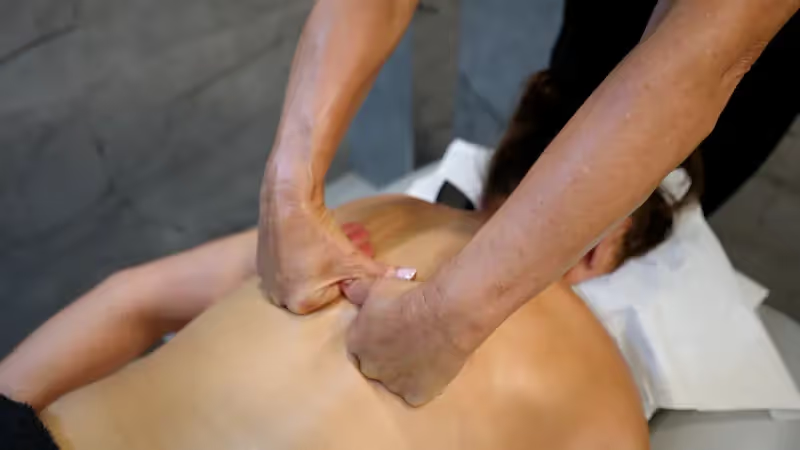
Hands-on therapy supports this process by easing pain and addressing the calf muscles and surrounding tissues, while we guide you carefully through each progression so the tendon is challenged enough to adapt without being overloaded. We also look closely at the factors that triggered the problem, from training habits to footwear and biomechanics.
Education is a key part of our care. We explain why the tendon became painful, what recovery is likely to involve and how to manage your activity along the way, helping you stay on track and reducing the likelihood of the problem returning.
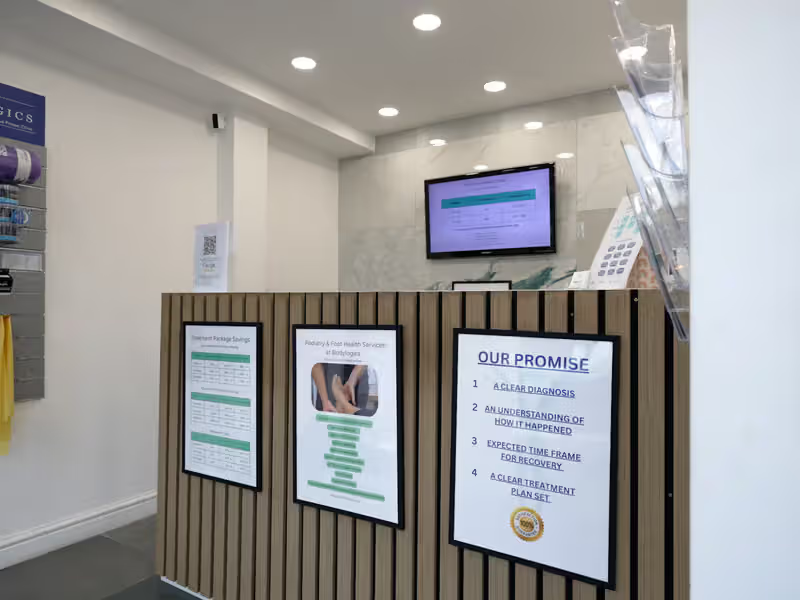
Every initial session is built around our four-point promise, so you know exactly where you stand.
A clear diagnosis of what is causing your pain and weakness
An explanation of how and why the problem has developed
A realistic time frame for your recovery
A treatment plan designed around you and your goals
Established in 2009, Bodylogics has grown into a trusted name for physiotherapy and rehabilitation across North London, supported by more than a thousand five-star Google reviews. Our team holds professional registration with the HCPC and the Chartered Society of Physiotherapy, and we publish our clinicians’ credentials openly, so you always know who is treating you.
We treat achilles tendinopathy at all four Bodylogics clinics, choose whichever is most convenient.
Knee, ankle, hip and lower-limb injuries, from sports trauma to everyday overuse.
Complete rest is usually not the best approach, as the tendon needs appropriate loading to recover. We help you find the right level of activity that allows the tendon to heal while keeping it strong, rather than letting it become weaker.
Tendons respond gradually, so recovery is often measured in weeks to months rather than days. With a consistent, progressive loading programme, most people see steady improvement, though patience and consistency are important.
In many cases some running can continue, provided it is carefully managed and kept within a level the tendon can tolerate. We will advise you on how to adjust your training so you keep moving without setting back your recovery.
No referral is needed to book with Bodylogics, and you can arrange an appointment directly at any of our four North London clinics. If you intend to use private health insurance, your provider may request a referral first, so it is sensible to confirm with them beforehand.
Achilles tendinopathy is treated at all four of our North London clinics in Barnet, Whetstone, Winchmore Hill and Colindale. Pick the most convenient location and our team will arrange your assessment.
You do not have to put up with the problem or simply hope it settles by itself. The sooner you are assessed, the sooner we can help you understand what is happening and start your recovery.
Book at your nearest clinic in Barnet, Whetstone, Winchmore Hill or Colindale, and let us help you move comfortably again.