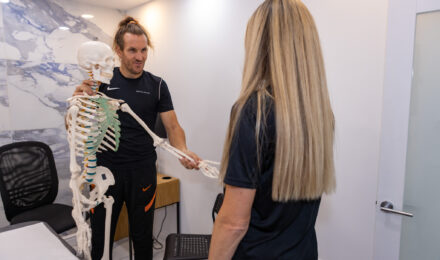
Blog post produced and written by Injury Rehabilitation Specialist Monika Smiechowska.
In basketball, lower body injuries are extremely common and very often affect the ability for athletes to play during the season.
Knee injuries are the second most common injury in all levels of play in basketball, right after ankle injuries. Knee injuries in basketball can be caused by many external factors including trauma, overuse and non-contact.
Research shows that in order to maintain good knee health and decrease risk of injury, a play must address issues above and below the knee joint – in this case the hip and ankle joints.
Glute strength
The glute complex controls stability and motion of the hip. ACL injuries are one of the most common injuries in basketball, particularly in female athletes. Up to 64% of ACL injuries happen as a result of a non-contact incident occurring when the tibia and femur bones twist opposite to each other, or they overextend. Glute complex strength can help to control the twisting and overextending motion therefore it is crucial.
Ankle mobility
Lack of range of motion at the ankle joint often is one of the biggest culprits in knee injuries.
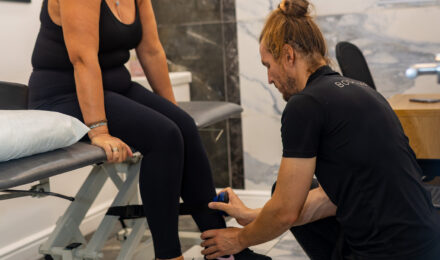
Studies have repeatedly shown that reduced dorsiflexion leads to changes in the loading of the Achilles tendon and consequently increases the demand on the knee joint as it has to compensate for the lack of motion. Ankle mobility is often limited by muscle or joint restrictions, therefore regular mobilisation and stretching of the area helps to increase that. Banded distractions are great for this!
WE are here to help YOU!
Knee injuries require specific rehabilitation that can sometimes be complicated and overwhelming. Sport specific return to play protocols should be followed prior to returning to sport.
If you have suffered with a knee injury and require assistance, at Bodylogics we have a team of specialists who will be able to guide you through the process!