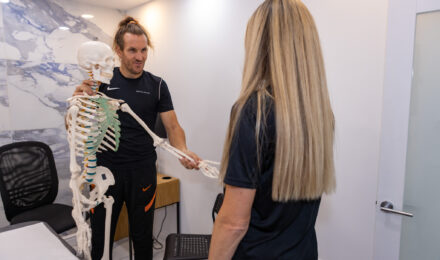
Blog post produced and written by Clinic Manager and Sports Injury Specialist Jason Dodd.
Before I begin, it’s vital you read the WHOLE of this blog so you can really see what my thoughts are. If you only go halfway then you will only have half of the facts. And if you don’t follow us on instagram already then you really should, we are posting some great content which is causing some big debates….and the beauty of it all is that’s our aim!
We are trying to get you all to challenge what beliefs you already have. If you have evidence based facts then please comment and start the discussion but our aim is to hopefully educate and open our minds to the other possibilities that exist which can also help you with injury.
I want to start with an analogy. You will often go onto some social media platforms and see some people asking for recommendations of particular services. People ask for these recommendations as we want to ensure that whoever carries out the service for us is trustworthy. Once we source our service person we then assume that what is being said to us is true, as we have trust in them based on the recommendation. But how do we actually know whether they are being truthful? Imagine you had the knowledge already available so that when you ask about it you know the answer before it comes and know what to expect…..
Recently, I posted some content on cortico-steroids. This created some heated questions regarding the efficacy and outcomes. The main comments came in the form of ‘but it worked for me so how can you say it’s bad!?’. Now, the important point to note is that at no point did we say it was bad, we merely mentioned the facts of how it may diminish pain short term and how MULTIPLE injections may be bad for joint health. From my time as a therapist I have actually advised people to get an injection for their pain as other forms of management have not settled things, but this was supported with what the next steps were to be within the rehab plan and how the process will work. It is vital that education forms part of the rehabilitation programme to becoming pain free.
So let’s get the facts straight here with cortico-steroids. They are an injection based intervention which is designed to reduce pain and symptoms in the problematic area. Whilst they have been shown to have good short term impacts, the long term prognosis offers little clinical benefit (meaning the effects wear off). Once this wears off people often opt to have more injection as it took away the original pain they felt before. Often this second dose doesn’t work as well (for a number of reasons) but instead of thinking that maybe its stopped having its effect they opt instead to just have a higher dose in the hope it works better. This then leads to excessive and abnormal levels of cortisone in the affected area and creates a catabolic effect, meaning joint health is broken down and irreversible changes begin to occur. The longer term outcome of this is faster deterioration of the joint leading to enhanced likelihood of surgical procedures being necessary and changes to quality of life and joint function.
So what should I do instead?
Well, the answer is not so much what you would do instead, its more understanding why you would have the injection in the first place. By taking away the pain you should create ‘a window of opportunity’. This window is where you should begin your rehabilitation. The aims of rehabilitation is to help strengthen and restore normal function to the area so that it can continue to work in the best way possible. One of the biggest mis-conceptions is that injections can cure or repair the area that is causing pain. I really wish that was the answer but it’s not. It simply reduces the levels of pain but if the area is not acted upon then any benefits gained from the injection will eventually reduce.
But what about those who have the injection and do no rehab and then get better?
Another great point and one which can cause confusion. Any injury sustained will have a natural healing time frame. Take ACL ligaments, they will ‘naturally’ heal anywhere between 6 weeks to one year. This doesn’t mean they will be functionally normal but in the sense of true ligament healing will have of occurred. And once the ‘healing’ phase has completed, theoretically there should be no further pain. It is not as black and white as this but the point I am making is that injuries will naturally heal themselves due to the nature of the human body. It is not always healed well but it will heal.
So when cortisone injection has been used within a painful situation, what can happen is that the actual issue itself has ‘self-healed’ but the patient will attribute the healing to the injection when this is not the case. This is where beliefs can then be ingrained but this belief is not based on evidence, purely anecdotal. I know this is controversial to say and goes against the grain but it is a medical, evidence based argument being presented, not one of opinion.
And where do our beliefs and opinions stem from?
Often it can be attributed to what we have seen in the media and this can then influence our expectations for standard of care. Whilst we do not disagree with and 100% believe that you should expect the highest standard of care, it goes back to my original point of ensuring you understand the whole process so you are able to make the best informed decision that benefits your health.

One final point I want to leave you with. I recently saw a patient who had been ski-in and had torn their ACL whilst on the ski slopes. Now, any good surgeon or healthcare therapist should not have operated on this knee until the swelling has subsided and the knee was what we deem as being ‘quiet’. However, within 12 hours they had been taken to surgery and a full re-construction of the knee had taken place. This was based on the surgeon’s recommendation and as they did not know anything about the injury mechanics and how it should or should not be treated, they went along with the advice. Whilst to the general public we may look at this and say ‘that’s amazing, this is what happens in the professional sports world, I heard this is what happened with ‘X’ player’…..I would argue it is extremely poor practice for some pretty serious reasons.
The patient visited me at our clinic presenting with something known as arthro-fibrosis, which is basically a malfunction of the bodies system to lay down new muscle fibres and instead of laying down the ‘perfect’ amount, they lay down excessive amounts which end up creating a block on your joint movements. After sending her away for an MRI it was confirmed. The only way to solve this is through more surgery! So our patient is now having two operations in the space of 4 months which also reduce the chances of successful outcomes of the actual ACL surgery!
So hopefully you can see my point here. Although my posts can be controversial, I hope you are all able to see the reasoning behind them and that they are actually designed to be in your best interest, even if it goes against your current opinion. If you ever wanted to talk through any of the things posted or are unsure on anything then you are always welcome to contact us and we will do our best to give you all the information you need so you can make the decision which is best for you.