Monika Smiechowska Injury Rehabilitation and Strength & Conditioning coach – Blog post produced and written by Monika Smiechowska Injury Rehabilitation and Strength & Conditioning coach.
Being proactive and a regular gym goer is great, however you need to remember to look after your body, as regular exercise can also cause you overuse/wear and tear injuries that you might not even think about. In this blog, I will be talking about a very common injury caused by running, and ways to manage it.
Due to the current circumstances, many people have started to exercise outdoors – running, conditioning, weight training etc. Running on hard surfaces is one of the biggest causes of injuries to the foot, and many runners pick up Plantar Fasciitis. Repetitive ground contact causes inflammation to the sole of the foot and consequently gradual onset of pain and stiffness. These symptoms are at their worst in the morning, and improve throughout the day with activity
Plantar Fasciitis is known to have a negative effect on training, therefore identifying it and managing the signs and symptoms is essential! This overuse condition can be managed conservatively with a tailored rehabilitation programme and a variety of other tricks, including:
Exercise programme
This part of treatment should focus on strengthening the muscles involved, predominantly the tibialis posterior. Therabands are great for this!
Stretching
Stretching the overactive muscles is essential in order to regain optimal agonist-antagonist muscle length. Stretching should include: calves (gastrocnemius and soleus complex).
Taping
Low-Dye taping, which involves the application of rigid tape to the plantar aspect of the foot with the aim to support it.
Self-Massage
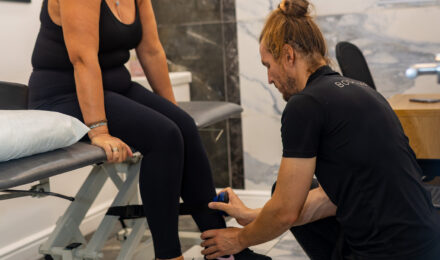
Using a frozen bottle or a golf ball to massage the sole of the foot can be highly beneficial and get rid of nodules within the fascia.
Customised foot orthoses
Foot orthoses can be beneficial in more severe cases of plantar fasciitis. It can help re-educate the foot to return to its optimal alignment and therefore reduce symptoms.
Corticosteroid injections
In more severe and chronic cases, specialists often turn to corticosteroid injections in order to reduce pain and discomfort for the patient.
Plantar Fasciitis is a common and debilitating condition and is quite hard to manage. The above advice is a general pathway to managing this condition and it is important to consider that a specific rehabilitation programme which focuses on releasing the area and building the strength will ensure a better outcome in the long term. My approach will usually focus on reducing the pain first off before conducting a robust strength and conditioning programme which will help to keep the pain at bay. For assessment and treatment contact me at the clinic and I would be happy to discuss with you a plan on how we can get you on the path to recovery.