
Blog post produced and written by Specialist MSK Physiotherapist Jason Dodd.
Radial Shockwave Therapy: How It Works for Musculoskeletal Conditions
Expert Tips from our highly experienced therapists to Boost Your Recovery
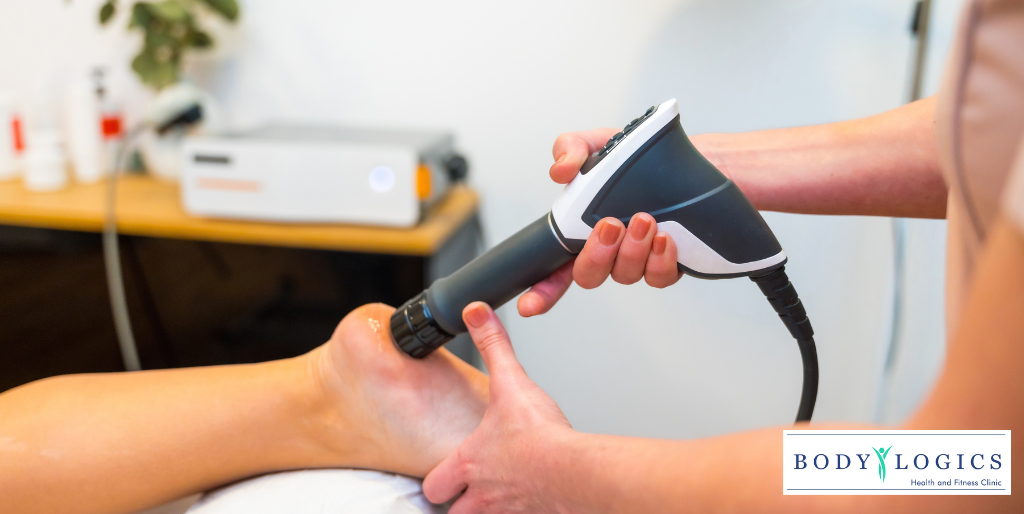
Musculoskeletal (MSK) conditions—such as tendonitis, plantar fasciitis, or calcific shoulder tendinopathy—can be persistent, frustrating, and resistant to traditional treatments. Fortunately, Radial Shockwave Therapy (RSWT) offers a scientifically-supported, non-invasive treatment option that’s changing the game in physical rehabilitation.
What is Radial Shockwave Therapy?
This therapy is commonly used in sports medicine, physiotherapy, and orthopaedics to treat a wide range of chronic MSK conditions—especially where conservative approaches like rest, manual therapy, and exercise haven’t resolved the issue.
How Does Radial Shockwave Therapy Work?
Mechanical Stimulation
The pressure waves trigger microscopic tissue damage, which sounds alarming—but it’s controlled and therapeutic. This stimulates the body’s natural inflammatory response, which is often absent or “stalled” in chronic injuries.
Neovascularisation
Shockwave therapy promotes the formation of new blood vessels (neovascularisation), especially in poorly vascularised tissues like tendons. This increases oxygen and nutrient delivery to the injured site, accelerating healing.
Pain Modulation
Radial Shockwave Therapy impacts nerve endings by overstimulating them and modulating pain signals sent to the brain. This desensitisation of nerve fibres can lead to both immediate and long-term pain relief.
Breakdown of Calcific Deposits
In conditions like calcific tendonitis, Radial Shockwave Therapy can help disintegrate calcium build-up, making it easier for the body to reabsorb and eliminate it.
Increased Collagen Production
Collagen is the building block of soft tissue. Radial Shockwave Therapy encourages the production and realignment of collagen fibres, leading to stronger, more functional tissue repair.
What Conditions Can Radial Shockwave Therapy Treat?
Plantar Fasciitis
> *A 2018 systematic review* showed significant improvement in pain and function after Radial Shockwave Therapy, often outperforming corticosteroid injections.
Achilles Tendinopathy
> Radial Shockwave Therapy helps by promoting tissue regeneration and reducing pain, especially in mid-portion Achilles issues.
Patellar Tendinopathy (Jumper’s Knee)
> Studies show improvement in jump performance and pain reduction after a course of Radial Shockwave Therapy.
Tennis Elbow (Lateral Epicondylitis)
> Radial Shockwave Therapy is effective for reducing pain and improving grip strength, often more effective than traditional modalities.
Calcific Rotator Cuff Tendinopathy
> Radial Shockwave Therapy helps break up calcific deposits and improve range of motion and pain levels in the shoulder.
Greater Trochanteric Pain Syndrome
> Particularly useful in chronic gluteal tendinopathy, helping to reduce pain and improve walking function.
How Many Sessions Are Needed?
Is It Safe? Any Side Effects?
* Redness or swelling
* Localised soreness for 24–48 hours
* Rare bruising in sensitive individuals
It is not recommended for patients with blood clotting disorders, active infections, or those who are pregnant.
Final Thoughts
If you’re suffering from a chronic tendon or soft tissue injury, Radial Shockwave Therapy could be the next step in your recovery journey—non-invasive, research-backed, and with a growing body of clinical success to support its use.
If you’re suffering from a chronic tendon or soft tissue injury, Radial Shockwave Therapy could be the next step in your recovery journey—non-invasive, research-backed, and with a growing body of clinical success to support its use.