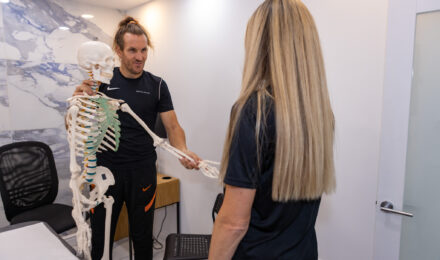
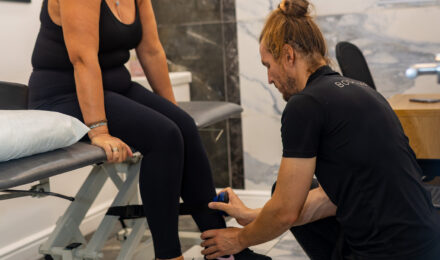
Blog post produced and written by Clinic Manager and Sports Injury Specialist Jason Dodd.
Recently, a famous pair of physical therapist who go by the name of Bob and Brad appeared on the CNN news channel discussing ‘the best sleeping postures to avoid back pain’. Their information can be found on the link below
https://twitter.com/CNN/status/1462748947248648192
HOWEVER…. I have a real problem with this production. Bob and Brad have a huge influence on many people’s beliefs and opinions, alongside a huge following of people on their social media channels. Many people will watch and listen to the advice they give and try to apply this to their everyday lives. The issue is…..not one piece of information here is based on any scientific research or evidence.
The problem with mis-leading information
Why is this a problem? Mis-leading information based on opinion as opposed to fact can lead to poor prognosis and poor outcomes in patients, as well as be very costly. For example, the point made here about purchasing a new mattress will prove costly for many people. Whilst the new matress may help reduce pain, it will not necessarily solve it. Again, in the instance of a new matress, it is not necessarily the shape of your spine as it rests on the matress that will change your pain, but instead the nociceptive feedback to your brain that will instead alter the pain production at that particular site. It’s almost the same as tape for injuries, many studies show that the tape doesn’t actually hold anything in place, yet it changes peoples pain. Why may that be then?
In the case of Bob and Brad, their claims of certain sleeping positions are unfounded according to many studies. Often people will say their pain is due to ‘sleeping funny’. Whilst this sounds logical and allows us to have an explanation to our pain, a study showed that on average we will adopt 33 different sleeping positions throughout the night (Kubota et al, 2003). So the position we may fall asleep in and wake up in, would have changed multiple times throughout the night without even realising it.
What are the facts then?
Another study by Cary et al, 2016, showed no association between sleeping position and spinal pain symptoms. Both the studies here monitored and filmed patients sleep in controlled environments so were able to accurately identify their findings which would then lead to ‘scientific and factual results’ which reflect a truthful and representation of the topic.
Whilst much of the information provided by Bob and Brad can be helpful and useful, I just feel if anyone wishes to spread information regarding any topic then they must ensure they support it with factual evidence, otherwise we end up in situations where poor quality information and opinion is circulating in society which ultimately results in unfounded beliefs that reduce the likelihood of successful outcomes in painful experiences.
With pain during sleeping there can be many factors contributing to this. Inflammatory conditions can lead to pain when resting, fatigued muscles from overload can lead to ischemia which can then lead to pain within the back or neck….but none of these are directly related to our sleeping position so it is impossible to say that some positions are better than others. The bottom line should be, if it is comfortable then sleep in that position. Don’t be influenced by non-evidence based information which may lead to you avoiding certain positions because of a fear of making it worse. Until this is proven we should continue to sleep however we want and focus on getting good sleep as opposed to the ‘how we sleep’.
- KUBOTA, T., OHSHIMA, N., KUNISAWA, N., MURAYAMA, R., OKANO, S. and MORI-OKAMOTO, J. (2003). Characteristic features of the nocturnal sleeping posture of healthy men. Sleep and Biological Rhythms, 1(2), pp.183–185.
- Cary et al., J Sleep Disor: Treat Care 2016, 5:2http://dx.doi.org/10.4172/2325-9639.1000173