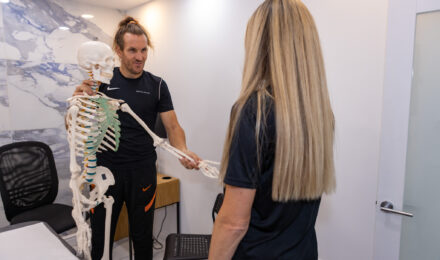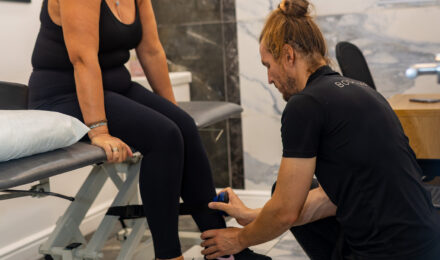

Blog post produced and written by Clinic Manager and Sports Injury Specialist Jason Dodd.
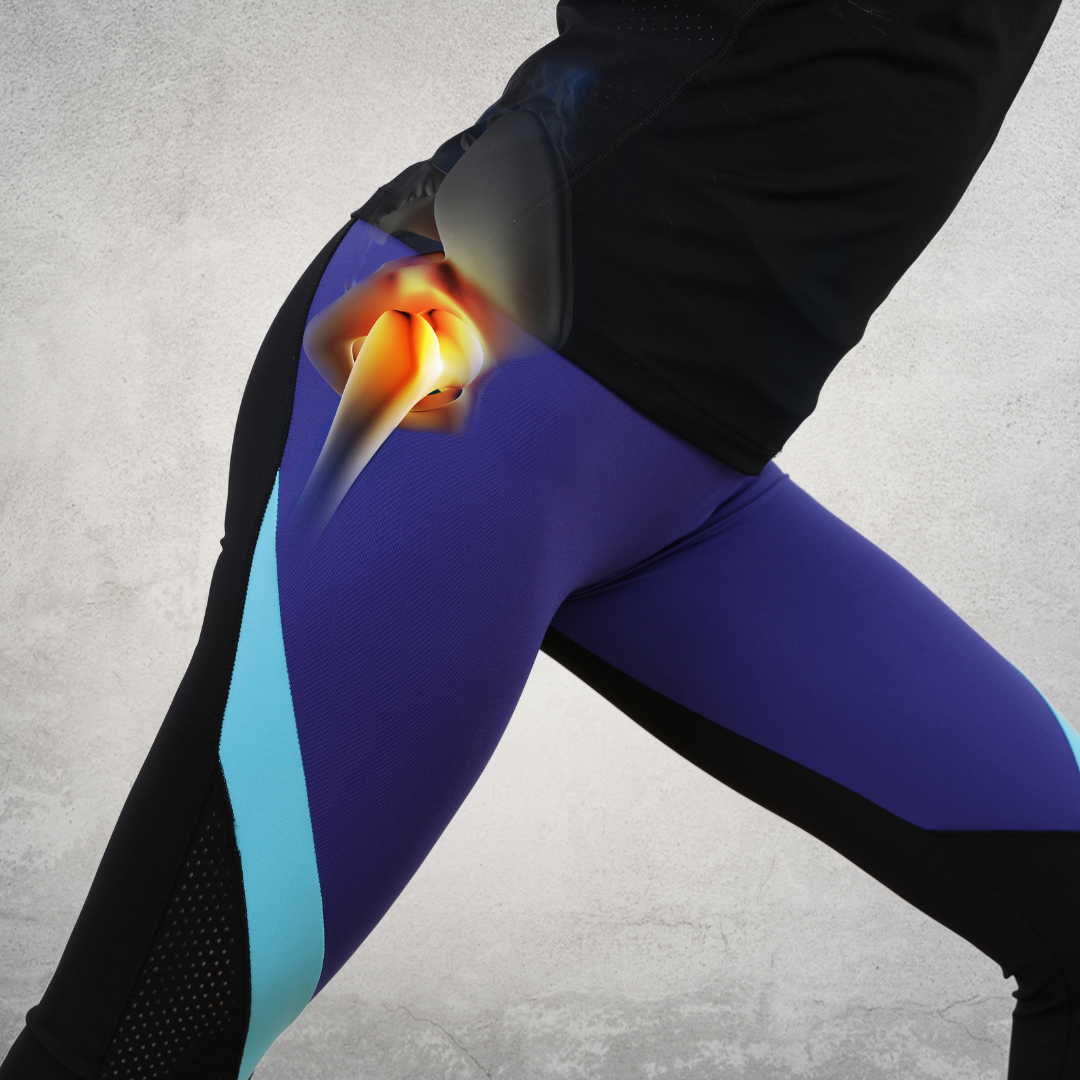
Recently I have been treating a number of hip conditions which are either creating pain or reducing function. Either way, they can be super frustrating for the patient when progress is slow. What is key to note here is that whilst progress may seem slow to them, the actual progress they are making from a biological stance is actually really good. A few of these conditions I have been treating recently are FAI and hip OA. Both of these conditions have been confirmed with imaging within the patients I am currently seeing and both have been advised to trial conservative management first off.
How can your Physio/Sports Therapist fix your issue?
What is important to understand in most pathology (with the exception of acute trauma which is caused by something such as impact, for example) is that the underlying condition/process has not just ‘come about’. By this I mean that this structural change has probably existed for a large part of your life (in the instances of FAI the changes are usually in place from the age of 16!). The question then remains ‘well why is it now hurting’?
Why am I in pain? It's never hurt before......
Our first and foremost reason is what I have just explained. You have probably lived with this for years beforehand so we need to find a way to restore your original ‘normal’ and not be solely guided by the structural changes that we believe may be causing the pain. If and when we have attempted the conservative approach and things have calmed down then we can be sure that we can manage this in this manner for a large part of the foreseeable future.
Second, should conservative management fail and other options such as surgery are considered, then having a strong base before going into surgery is going to mean your recovery is likely to be faster. So the time spent on conservative rehabilitation becomes well spent and not done ‘for the sake of it’. As with any surgery, the level of rehabilitation after to get back to full fitness is high. It is a huge misconception, which I witness fairly frequently, that the surgical intervention is the solution and that nothing needs to be done after.
At the bottom of this blog post I have posted a video of a total hip replacement – take a look at the level of trauma involved during this surgical procedure. The question that always comes to mind is ‘if you had another form of trauma in line with what you see here, is there any wonder that there is a lot of pain afterwards’.
So the bottom line here is that although conservative management may not make sense from a structural pathology viewpoint, it is important to know that structure does not always mean harm. I reiterate my point made earlier where the chances are you have lived with this condition for many years and it has just decided to cause a problem right now. If we can work out what has caused it, and make the changes to stop it happening again, then your chances of successful outcomes are much higher. I tend to find the issues tend to arise when people leave it for too long and the irreversible damage is already done.
I hope this is useful if helping to explain some of the common questions that arise in our industry. If you want to find out more or would like us to write on a topic relevant to you then please feel free to contact us with ideas!