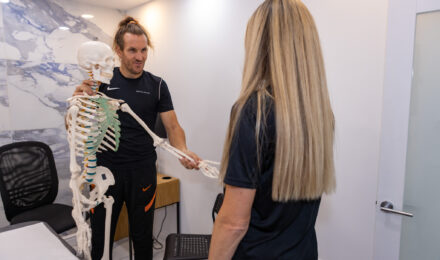

Blog post produced and written by Clinic Manager and Sports Injury Specialist Jason Dodd.
It is usually around this time of the year that I will see a number of runners who are suffering from bone stress injuries. They occur mainly in the shin area and can affect either the tibia or fibula bone.
They almost always are a result of loading bones more than they are capable of. It is super common this time of the year as many people are preparing for their Spring Marathons.
But how do they come about and, more so, how can they be avoided? After any bout of exercise, the body will spend time recovering and restoring the system back to normal, and will do its best to make it stronger (think how we build muscle) by replacing lost bone cells.
BUT, when we do not allow enough time for recovery, our bones start working in ‘negative territory’ meaning the bones cells cannot repair as quick as they are being ‘lost’. This means the bones work at a deficit and do not have the required strength/capacity to cope with the load. And, in almost ALL marathon plans, the mileage keeps increasing each week as part of the training.
This leads to the bones being asked to cope with more but with less physical capabilities. Imagine a work force having people going off ill each week and the boss giving more work to do with fewer workers – eventually the workers will give up/fail/breakdown. This is the same event with bones.
Managing/preventing this injury relies on load management, appropriate recovery, good diet habits, increased sleep hygiene, easy training days plus much more. It is quite complex but with the right advice and guidance from a trusted coach, PT, Physio, etc… it is easy to avoid and will enable you to run that PB in the Spring.
Many people believe that running alone is enough to build bone strength. This is in fact a myth. It is to do with the body’s ability to adapt to a particular stress, and the repetitive loading nature of running means that after a cycle of 100 steps of loading, the body’s cells stop making any relevant changes to deal with the loading (they become ‘deaf’). This then leads to increased risk of injury as many people believe they are doing their bones justice and making them stronger, whereas in fact they may be doing the opposite.
See the British Journal of Sports Medicine blog post on this information here for further evidence.
But how do people stay bone injury free if they do lots of running? Usually, a rest of 4-8 hours after the cycle loading is sufficient to repair the bones that have been damaged when running (remember, all bones and muscles are damaged during exercise, our body repairs and restores them during rest periods). But our bodies will only have a set tolerance of how much they can sustain before they break down.
This is why some people can avoid injury and others cannot. There are many factors that can assist this. For example, we know that different types of running (sprint work, tempo work, long duration work) all have different requirements of the bone and therefore the bone adapts in different ways. The biggest issue lies with the athlete who does the same pace, same distance, etc…. every day. The body will not make the relevant adaptations and therefore injury risk increases.
It has been suggested that heavy weight training is a better alternative than running. Incorporating this into your weekly plan will help add a relevant load to the system and enable the bones to adapt more than running alone.
It is a tough pill to swallow, many runners fear ‘bulking’ up if they incorporate running into their plan, but again this just not true. The cellular effects of Cardiovascular exercise will always mitigate the cellular effects of ‘hypertrophy’ (this is the act of ‘bulking’) BUT it will not affect the cellular action of strength building. It is important to understand that these two things are very different. Adding in weight training alongside your cardio work will not result in huge muscle gains but will increase your strength. A win-win in my eyes!
If you are struggling with your running and seeking advice and help to improve your running, then contact us now and book in to see one of our highly trained medical professionals who can assist with your performance and injury plan.