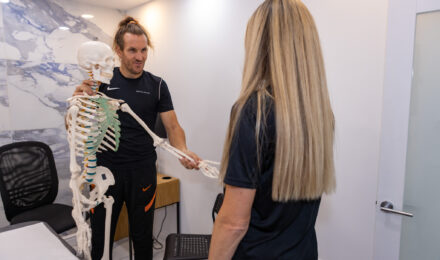
Blog post produced and written by Sports Injury Specialist Monika Smiechowska.
This week I wanted to share a case study with you, based on a patient I have seen recently.
Amanda, a 42-year-old Events Manager, has come to see me with pain in her left lower back/buttock area that often travelled down the back of her leg. She didn’t sustain any traumatic injuries, therefore was unsure about what may have caused the pain.
Amanda’s line of work usually requires her to sit in front of a computer for a significant amount of time throughout the day, and by her own admission, her activity levels have definitely decreased since she started working from home.
Patient assessment:
Whenever patients complain of referring pain/sharp pain that shoots down distally it is always vital to rule out any neurological complications.
Amanda’s assessment included a cluster of special tests including FAIR (flexion, adduction and internal rotation) and piriformis tests to check the irritation of the sciatic nerve by the piriformis muscle, thorough palpation of the area as well as some manual muscle testing of the surrounded tissue. We were able to replicate her symptoms by aggravating the piriformis muscle, which indicated she suffered with Piriformis Syndrome.
What is piriformis syndrome?
Piriformis Syndrome is mainly caused by spasm of the piriformis muscle which often results in buttock pain that can travel down the back of the leg due to the irritation of the sciatic nerve. Other symptoms may also include tingling, numbness or burning feeling around the area.
Treatment:
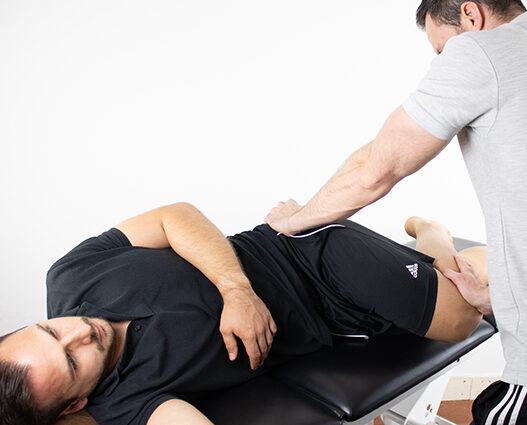
Initial treatment focused on releasing the tension within the soft tissues – this included hands-on therapy where various strokes such as friction, effleurage, STR, PNF stretching and trigger point release were used.
Following the manual therapy, it is important to continue treatment through exercise prescription. The exercises demonstrated mainly focused on nerve decompression, they included stretches and mobilisation techniques applied to the muscle to increase range of motion.
Prevention of Piriformis Syndrome:
As with any injury – prevention definitely is better than cure.
Because of the nature of Piriformis Syndrome – regular mobilisation and stretching should prevent the spasms from happening.
Here at Bodylogics we see many patients with similar injuries/aches. Our team is extremely experienced in being able to help you solve these issues.