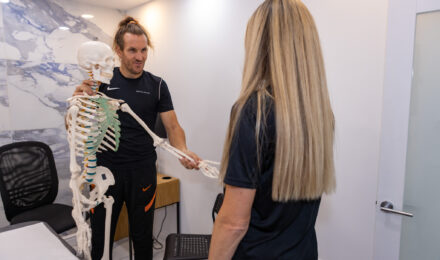

Blog post produced and written by Clinic Manager and Sports Injury Specialist Jason Dodd.
Over the last few weeks I have been writing a lot of content on knee pain and how you can treat and manage the condition in the best way possible. Lately though I have seen a few patients with knee pain whereby they have visited me for a second opinion as the pain was not diminishing in the way they had hoped for.
To start with, when questioning the patient the feedback I was given regarding the exercises they were given was really good. There was nothing that suggested there was an issue with that at all. It just didn’t make sense that the condition was not getting better.
Knee Assessment - what do I look for?
When presented with these situations you have to look further afield. The first thing to do is check the areas above and below the joint. I checked the ankles and there were no issues but when checking the hips of these patients we started to get a sensation that marginally recreated the pain (more so than any other test of the knee). We then carried out a full assessment of the hip and when it came to our neural stress tests (whereby we stress particular nerves of the body with specific movements) we were able to start getting more of that painful condition experienced in the knee area.
So what did this tell us? Well, it clearly first off shows that the knee itself is perfectly fine. The issue actually comes from the hip area. Given the age of the patient there is most likely some early signs of osteoarthritis in the hip as range of motion was reduced slightly but the key probability is most likely due to a muscular tightening of the area which is trying to protect the hip joint from positions that trigger an inflammation response and whilst it is tightening it is pushing gently on what is known as our femoral nerve which runs down to our knee area too and it is this cycle of events that is now presenting itself as pain at the knee.
When is knee pain not the issue?
This assumption is purely speculative of course but it highlights how we can get things wrong even with all the tools we currently have at our disposal.
On the same note though, we can sometimes jump from therapist to therapist until we get the answer we are seeking. In this case I felt sorry for the previous therapist as they only saw the patient for one session and because they did not get better they sought advice elsewhere. The treatment and intervention they received elsewhere was actually really good and I did not have any qualms about it at all. It was just a working hypothesis was determined at that appointment and I would like to think that had they gone back there and explained to them what they did me then the intervention and assessment would have focused more on the hip the second time around.
The bottom line here is this. Although pain can be scary and worrying, it often gets better once we know exactly what is happening. And unfortunately, it is not always easy to work it out straight away, with or without scans. I have seen the body compared to a car before and how you have to have the oil checked, brakes aligned, etc…. and then it all works really well. The reality is though that a human and a car are not even remotely comparable in how they work or operate so to treat them as the same concept is clearly wrong.
I hope that this can be of some use to you and please remember that pain and injury just isn’t always as straight forward as it may seem.