Blog post produced and written by Clinic Manager and Lead Sports Massage Therapist Jason Dodd. Here Jason talks to us about how to manage pain without medication.
Pain is hard to manage. When injuries occur, the first thing we all want to do is remove this pain we are experiencing. Our two most common choices are the application of Ice and then taking of anti-inflammatory medication in the format of either paracetamol or ibuprofen (most commonly). However, recent studies and research has begun to show that the application of Ice has little or no effect on soft tissue injuries and has in fact been shown to reduce healing times due to it’s inflammatory effect. The same can therefore be said for ibuprofen. Ibuprofen has an anti-inflammatory effect and it is for this reason that it is advised against. Inflammation is a good thing when it comes to healing soft tissue, therefore we should encourage it to some extent and not prohibit its effects.
The question then remains, well how do we manage pain without relying on these pain reducing modalities? Is it better for us to avoid ‘pain killers’ as such and instead focus on other ways to manage this pain. The simple answer is yes BUT then how do we do this? The BJSM have come up with a great infographic highlighting the best management techniques for pain, and the greatest part about it is….there is no simple solution. Pain is such a complex part of the human body but the key is to understand this and acknowledge that here is no ‘recipe’ to change pain, just simply ways to manage the pain and give yourself the greatest chance of recovery and return to play.
Below we simplify the statements made on how best to manage pain without the use of pharmacological commodities.
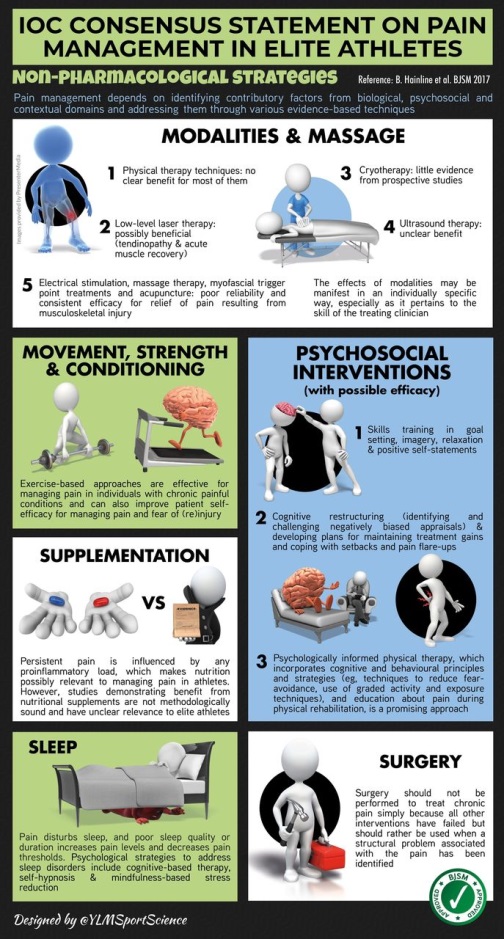
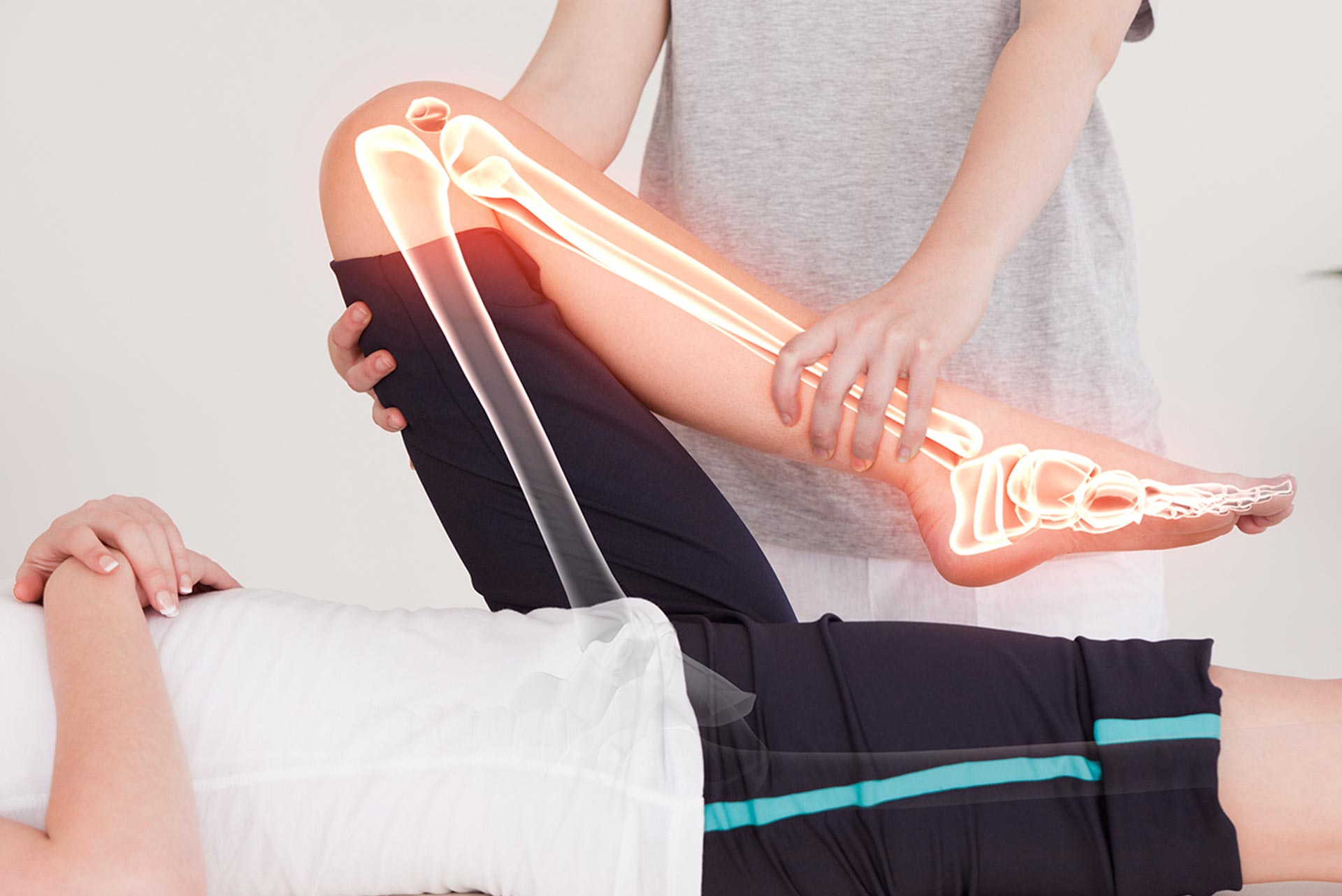
- There are many modalities that exist to help with recovery and pain management. One of the more common things is sports massage, which is a key component of the Bodylogics services offered. Massage has a direct impact on the biological make-up of the body. But each individual reaction is different. Just in the same way that people will react to different medications or even different foods, the same applies to this form of treatment. It is therefore important to understand its effects but also its limitations in the treatment of soft tissue injuries and beyond.
- Utilising strength programmes and movement guidance is critical in the management of pain. Most often the pain is a result of an inability of the muscle groups to cope with the load being placed on it causing it to breakdown and cause pain. Understanding how to manage your own individual programme and why the injury has occurred is vital to helping patients manage themselves away from the clinic and prevent any reoccurrences. It is here where the balance of rest and challenge is essential so that improvement can be made without the risk of re-injury.
- Psychosocial interventions. One of the most under-rated intervention strategies. Our Cognitive beliefs are beliefs which have built up over a long period of time and affect our behaviour towards certain events or information. The theory of the application of Ice and its effects are ingrained in our cognitive memory. Changing this belief from a positive to a negative will naturally be met with a sense of reluctance as it is something we have been led to believe now for some time. BUT, if we can educate people appropriately with relevant and factual information then we can eventually create greater change in how people manage themselves.
- Supplementation can have a positive and negative impact on our pain. Supplementation is often viewed as products such as protein shakes, protein bars, etc…. BUT in this instance we refer to supplementation as any substance taken through the form of food or drink. Food high in sugar and processed food have been shown to have pro-inflammatory substances within them, whereas things such as green tea have been shown to reduce have anti-inflammatory properties and can potentially settle any pains or discomfort you may have.
- Sleep – one of the most under-rated commodities in any athlete’s rest and recovery strategy. Studies have shown that you are almost two times more likely to get injured if you sleep for 6 hours per night compared to if you sleep for 8 hours per night. Getting a good night’s sleep is just as important as your diet and your actual training regime.
- FINALLY, surgery. Every Physio’s worst word. There are many studies out there now showing the effects of sham surgery against an effective rehabilitation programme, yet so many of us sill opt for surgery early on as we believe it to be the simple answer. It doesn’t work like that unfortunately. Knee surgery for the removal of meniscus injuries or shoulder surgery for the reduction of shoulder impingement have all been shown to lack any evidence now that they are effective forms of treatment. Instead, a thorough strength and conditioning programme should be adhered to as first intervention care and should this not improve symptoms and function then surgery should be considered as a final, end option. We need to change the way society views surgery.