
Blog post produced and written by Advanced Specialist MSK Physiotherapist Jason Dodd.
Upper back pain is a common complaint, often linked to long hours at a desk, poor posture, or sitting slouched over a laptop. But posture isn’t always the whole story. Increasingly, research is showing that **stress and its effects on the body’s hormone systems** may also play a huge role in why people experience pain and stiffness in their upper back.
One key hormone involved here is **cortisol**, sometimes called the “stress hormone.” Cortisol is released by the adrenal glands as part of the body’s natural stress response. In small bursts, it helps us deal with challenges. But when stress is **chronic** and cortisol stays elevated for too long, it can create a cascade of problems that directly affect how we feel physically.
Why is it relevant?
Patient story
What intervention was used and how?
* A structured programme of physiotherapy exercises to strengthen postural muscles and improve mobility.
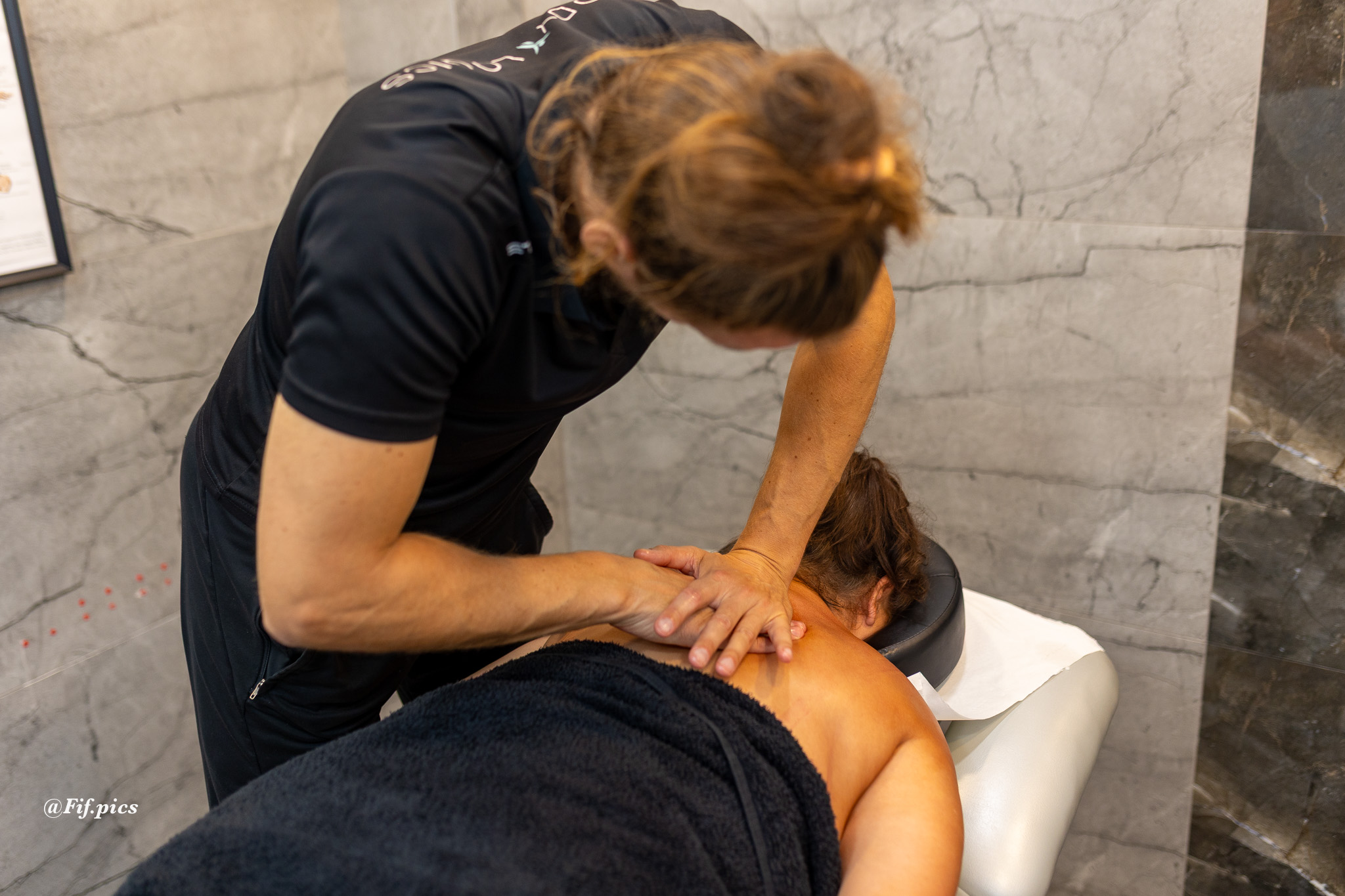
* Regular **massage therapy**, proven to reduce cortisol levels and promote relaxation.
* Guidance on sleep hygiene, stress management strategies, and daily stretching routines to keep tension at bay.
The Outcome
* Less stiffness in their upper back
* A reduction in stress levels and improved sleep quality
* Greater resilience to long workdays without recurring pain
By addressing **both posture and stress**, we helped them regain control, rather than chasing short-term fixes.
The outcome
Supporting research;
* **Cortisol and pain:** Chronic stress and high cortisol levels can weaken the immune system, impair muscle recovery, and contribute to pain perception (McEwen, 2007, *Annals of the New York Academy of Sciences*).
* **Massage and cortisol:** A meta-analysis by Field et al. (2005, *International Journal of Neuroscience*) showed that massage therapy can reduce cortisol levels by up to 31%, while also improving serotonin and dopamine — hormones linked to mood and pain regulation.
* **Posture and pain:** A systematic review (Brinjikji et al., 2015, *European Spine Journal*) found that while poor posture can contribute to musculoskeletal pain, psychological stress is often just as strong, if not stronger, in predicting pain intensity.
Conclusion
The good news is that there are effective ways forward. Seeing a physiotherapist can help you identify the true cause of your pain and create a plan that works for you. With the right mix of physiotherapy, massage therapy, and stress management, you can reduce cortisol, improve posture, and get back to living pain-free.
If you’re struggling with upper back pain, book an appointment with our team today — we’ll help you not only treat the symptoms but also address the root cause.