Blog post produced and written by MSK Physiotherapist Haroon Ahmer.
In this blog, Haroon explains what Stretchology really is. He’ll dive deeper into the benefits, the evidence that supports Stretchology and how sessions with our specially trained experts at Bodylogics, will help reduce pain and stiffness as well as increase range of motion, stability and overall performance.
What is Stretchology?
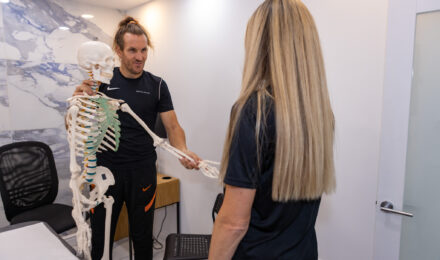
Stretchology is a scientific form of 1-2-1 assisted stretching. Stretchology goes beyond basic stretching routines by integrating knowledge of anatomy, physiology, and therapeutic techniques to optimise flexibility and overall body function. It uses a wide range of techniques and positions to help reduce pain and stiffness as well as increase range of motion, stability and performance in your sport.

Understanding the Anatomy of Stretching:
Stretching primarily targets the musculoskeletal system, which includes muscles, tendons, ligaments, and fascia. Here’s a closer look at how stretching affects these components:
Muscles: Stretching elongates muscle fibres, which helps in maintaining or improving muscle length. This is crucial for preventing tightness and ensuring muscles can perform optimally during physical activities.
Tendons: These fibrous tissues connect muscles to bones. Stretching helps maintain the elasticity of tendons, which is vital for transmitting the force generated by muscles to bones, facilitating movement.
Ligaments: These connective tissues link bones together at joints. While ligaments are less elastic than tendons, gentle stretching can help maintain joint stability and flexibility.
Fascia: This is a web of connective tissue that surrounds and penetrates muscles, bones, nerves, and blood vessels. Stretching helps keep the fascia flexible and functional, preventing restrictions that can lead to pain and reduced mobility.
Benefits of Stretchology:
Enhanced Flexibility and Range of Motion:
Stretching improves the elasticity of muscles and connective tissues, leading to greater flexibility and an increased range of motion. This is particularly beneficial for athletes, dancers, and individuals engaged in physical activities, as it allows for more efficient and effective movements. I have personally noticed a significant improvement in performance for athletes who are involved in running based sports (running, football, rugby etc) after a Stretchology session.
Injury Prevention:
By maintaining muscle and tendon flexibility, stretching reduces the risk of strains and sprains. It prepares the muscles for the stresses of physical activity, thereby minimising the likelihood of injuries.
Improved Posture:
Regular stretching helps correct muscle imbalances that can lead to poor posture. For instance, stretching the chest and shoulder muscles while strengthening the back muscles can help prevent a forward-hunched posture.
Pain Relief:
Stretching can alleviate chronic muscle pain and discomfort, particularly in the back, neck, and shoulders. It helps reduce muscle tension, enhances blood flow, and promotes the release of endorphins, the body’s natural painkillers.
Enhanced Athletic Performance:
Flexible muscles perform better and are less prone to injury. Stretching as part of a warm-up routine can enhance muscle coordination, reaction time, and overall performance in sports and other physical activities.
Stress Reduction and Relaxation:
Stretching has a calming effect on the mind and body. It can help reduce stress levels by promoting relaxation and reducing the tension that builds up in muscles throughout the day.
Improved Circulation:
Stretching increases blood flow to muscles and joints, delivering essential nutrients and oxygen while removing metabolic waste products. This promotes faster recovery and overall muscle health.
Improved Recovery:
Stretching improves recovery after vigorous exercise by reducing lactic acid buildup, enhancing blood flow, and decreasing muscle soreness, promoting faster healing.
Evidence Supporting Stretchology:
Scientific research underscores the benefits of stretching, providing a solid foundation for the practice of Stretchology. Here are some key findings:
Flexibility and Range of Motion:
Studies have consistently shown that regular stretching improves flexibility and range of motion. For example, a study published in the Journal of Strength and Conditioning Research found that static stretching significantly increased the range of motion in the lower limbs of participants (Behm and Chaouachi, 2011).
Injury Prevention:
Research indicates that stretching can help prevent injuries by enhancing muscle compliance and joint stability. A review in the British Journal of Sports Medicine highlighted that stretching as part of a warm-up routine reduces the incidence of muscle strains and ligament sprains (Herbert and Gabriel, 2002).
Pain Relief:
Stretching has been shown to be effective in reducing chronic pain, particularly in the lower back. A study in the Clinical Journal of Pain reported that a regular stretching program significantly reduced lower back pain and improved functional outcomes (Hamill et al., 2009).
Athletic Performance:
While the impact of stretching on performance can vary, a meta-analysis in the Scandinavian Journal of Medicine & Science in Sports concluded that dynamic stretching as part of a warm-up routine can enhance power, strength, and speed in athletes (Simic et al., 2013).
Stress Reduction:
Stretching promotes relaxation and stress relief by triggering the parasympathetic nervous system, which helps reduce heart rate and muscle tension. Research published in the Journal of Sports Science & Medicine found that stretching exercises led to significant reductions in stress levels and anxiety among participants (Stretch et al., 2013).
Practical Tips for Effective Stretching:
To maximise the benefits of Stretchology, consider the following practical tips:
Warm Up First:
Always perform a light warm-up, such as brisk walking or gentle jogging, before stretching. This increases blood flow to the muscles and prepares them for the stretching exercises.
Use Proper Technique:
Ensure you use correct techniques to avoid overstretching or causing injury. Hold each stretch for 15-30 seconds and repeat 2-4 times, avoiding bouncing or jerking movements.
Focus on Major Muscle Groups:
Include stretches for all the major muscle groups, particularly those that are prone to tightness or are heavily used in your daily activities or sports.
Breathe Deeply:
Deep, steady breathing helps relax the muscles and enhances the effectiveness of the stretch. Inhale deeply as you begin the stretch and exhale slowly as you hold the position.
Listen to Your Body:
Stretching should never cause pain. A mild, comfortable tension is beneficial, but if you feel sharp or intense pain, ease off the stretch.
How Bodylogics Stretchology Sessions Work?
At Bodylogics, we have trained specialists who provide a Stretchology service. Our packages vary from 30 to 60 mins. During that time, our specialists incorporate a variety of techniques to get the best possible result on the day via Stretching. This includes combining Stretchology with MET’s (Muscle-Energy Techniques), PNF (Proprioceptive Neuromuscular Facilitation) and Soft Tissue Massage.
Recently, I had a patient who came to see us prior to the London Marathon complaining that when he was running during his training regime, he would feel like he had reduced power in his right leg compared to his left, especially, when trying to increase his speed during his normal pace. After a thorough objective examination, I found that he had significantly reduced mobility in his right hip compared to his left hip, specifically in external rotation and hip flexion.
After 5 sessions of Stretchology, he reported feeling “good as new” and no longer had the problem of the reduced power in his right leg. More importantly, he’s now getting the same external rotation and hip flexion on both his legs.

Conclusion:
Stretchology is a holistic approach to stretching that leverages the principles of anatomy and physiology to optimise flexibility, prevent injuries, and enhance overall well-being. By incorporating regular stretching into your routine, you can experience a wide array of benefits, from improved posture and pain relief to enhanced athletic performance and stress reduction. The scientific evidence supporting the efficacy of stretching is robust, making Stretchology a valuable practice for anyone seeking to improve their physical and mental health. Whether you are an athlete, a fitness enthusiast, or simply looking to improve your quality of life, Stretchology offers a comprehensive path to achieving greater flexibility and wellbeing.
If you are looking to increase your mobility, reduce stiffness and increase your performance then get yourself booked in for a Stretchology session with our trained specialists!
References:
Mahajan, R., Kataria, C. and Bansal, K. (2012) ‘Comparative Effectiveness of Muscle Energy Technique and Static Stretching for Treatment of Subacute Mechanical Neck Pain’, International Journal of Health and Rehabilitation Sciences (IJHRS), 1(1), p. 16. Available at: https://doi.org/10.5455/ijhrs.00000004.
Behm, D.G. and Chaouachi, A., 2011. A review of the acute effects of static and dynamic stretching on performance. European Journal of Applied Physiology, 111(11), pp.2633-2651.
Hamill, R., Knutzen, K. and Derrick, T., 2009. Chronic stretching for back pain. Clinical Journal of Pain, 25(1), pp.73-79.
Herbert, R.D. and Gabriel, M., 2002. Effects of stretching before and after exercising on muscle soreness and risk of injury: systematic review. British Journal of Sports Medicine, 36(2), pp.123-130.
Simic, L., Sarabon, N. and Markovic, G., 2013. Does pre-exercise static stretching inhibit maximal muscular performance? A meta-analytical review. Scandinavian Journal of Medicine & Science in Sports, 23(2), pp.131-148.
Stretch, R.A., Peplinski, C. and Deakin, J., 2013. Stress relief and stretching: The role of stretching exercises in stress reduction. Journal of Sports Science & Medicine, 12(3), pp.467-473.