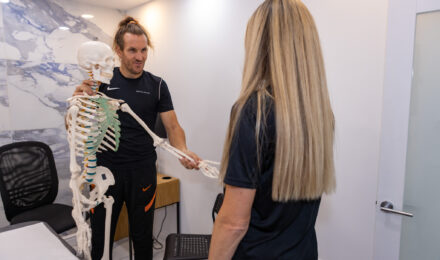
Blog post produced and written by Clinic Manager and Sports Injury Specialist Jason Dodd. The importance of following protocols and having a clear plan.
The last few weeks my case load has involved a number of post-operation patients who are seeing me having failed to progress in the way they had hoped. Throughout all of these appointments, there seems to have been a recurring theme that is raised each time.
When I begin any appointment I want to know as much as possible about the history of the injury and what they have done so far. Once I have heard this, I always ask ‘why?’ I want to know why the patient has done what they have been asked to do to see how much is understood. And this has been the recurring theme which seems to have had a huge block on the patients progression. When conducting any form of rehabilitation from an injury it is important to know the process that is being undertaken and equally as important is why you are doing it. If we can master this then every patient can see the real purpose to why they are performing each task.
Is the approach correct? Are we doing too little in what we set the patient? Is the patient doing all their activity at home as advised?
The patient who stands out most to me had a total hip replacement roughly 6 months ago. They came to me unable to maintain their balance on the operated hip. When they did this they almost collapsed to the ground through lack of strength. They had seen a Physiotherapist for 6 months and had been ‘discharged’ due to the patient being able to ‘independently walk with an aid’. Now, for me, being able to walk with an aid is where a patient should be at within 3 weeks of surgery. But this is defined by having clear protocols in place and these being clearly explained to the patient. When these milestones are not met then questions need to be asked of both patient and therapist. Is the approach correct? Are we doing too little in what we set the patient? Is the patient doing all their activity at home as advised? All these questions need to be looked at and an appropriate intervention put in place to change the course of progression. Without clear objectives though then the pathway to success becomes blurred and unclear which often leads to much slower progress.
I am not suggesting here that I am better than anyone else, nor am I saying that who they saw before me was not as good as me, but the point is by having clear goals with targets to measure successful outcomes over the duration of treatment, allows the patient to see their progress but also to ensure the therapist knows what they should be aiming for during each session/week.
Setting expectations is key
The patient I am referring to in this script here met with me and we went through what a structured plan should look like and where we expected patients to be at each stage of their rehab. This helped the patient to understand where they had met certain milestones but also where they had fallen short. This actually led to a large amount of disappointment in the patient and a feeling of being ‘mid-led’ with their previous therapist (their words, not mine), but I explained that it was not necessarily the therapist fault for this, it just may be that they do not specialise in post-operative patients or did not have a set of protocols that they follow as they do not see many of these patients.
Since our first appointment the progress has been really good. During each session the patient knows what is expected of them and has a clear programme to go away and work on. When we have follow ups, the patient knows exactly where they should be at before they even arrive and this then helps direct the treatment plan. It is not always plain sailing for sure, but by having clear and expressed goals it gives everyone a sense of measurement to decide if the rehabilitation is progressing as we hoped.
If you or anyone you now is struggling with their progress in rehabilitation then why not tell them to get in touch to discuss how we could help them with their pathway to recovery. I am confident they will not be disappointed and will be back to their best in no time!
In the meantime, why not check out our current available patient leaflets which are complete with educational content and also our very own protocols.
https://www.bodylogics.co.uk/patient-information-leaflets/