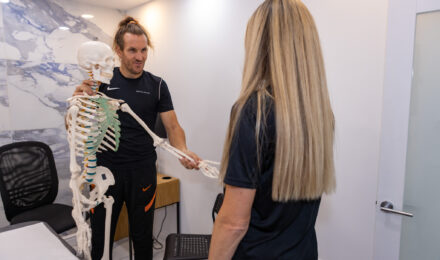
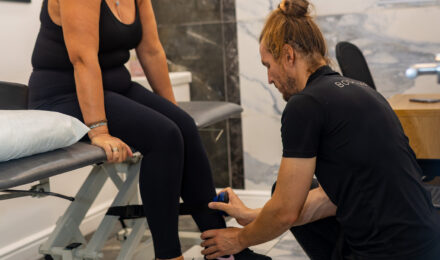
Blog written and produced by Monika Smiechowska – Sports Therapist and Injury Rehabilitation specialist.
Lower limb asymmetry – the importance of single leg training.
Isolating one side of the body during an exercise move can help identify any muscle imbalances in the body.
It is a well-known fact that most people are asymmetrical, meaning that they favour one side of the body more. Repeatedly favouring one side of your body can lead to injury as it forces muscle to overcompensate and work harder than they should or are used to.
9 out of 10 times, you can do a single-leg variation of all exercises. Here are some of my favourites:
- Single leg dead lift
- Single leg squat
- Single leg hamstring hold
These exercises are great as they often resemble day to day tasks such as walking, jumping or running.
It’s very important to note that a single leg exercise is often classified as a progression from a bilateral exercise, therefore being able to perform the exercise on both legs confidently first is a priority!
Progressing from a single leg exercise often includes additional weight, alternating plane of movement, adjusting stability or tempo – all of which are great ways of improving lower limb proprioception.