


Joe Catton, registered Osteopath and member of the Barnet Osteopathy Team. Joe shares his knowledge and expertise on tennis elbow and golfers elbow to help give you a head start in the treatment and prevention of this condition.
Tennis Elbow and Golfers Elbow (Lateral and Medial Epicondylalgia)
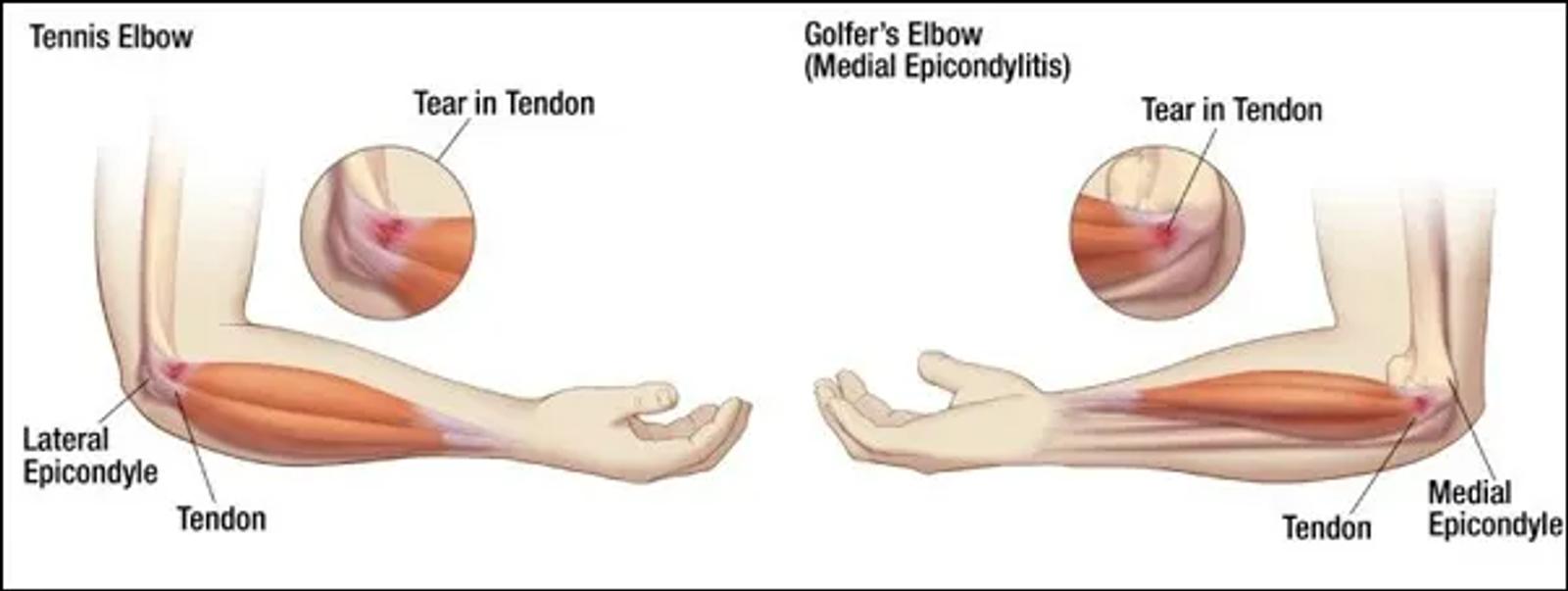
Tennis elbow is a common problem affecting the elbow resulting in pain to the outside of your elbow. Clinically it is known as Lateral Epicondylalgia as it affects the tendon where the muscles that extend the wrist, attach at the bony bump on the outside of your elbow. Which is known as the lateral epicondyle.
Golfers elbow is a similar condition but it affects the inside of the elbow. This is where the muscles which flex the wrist attach at the inside of the elbow known as the medial epicondyle.
The Causes:
Tennis and golfers elbow are not just caused by these sports. These injuries often arise due to overuse or the repetitive action of the muscles straining the tendon where is attaches. This can occur from the gripping action involved when holding a racket or club but also from other sports like weight lifting or throwing sports. In addition, jobs and hobbies with repetitive actions like carpentry, plumbing, painting, gardening and typing can also cause these issues.
Symptoms:
- You may notice pain and tenderness on the inside or outside of your elbow. This can extend down the forearm to the wrist.
- Pain is often worse with specific movements like twisting your forearm when opening a door or jar.
- It may be painful and stiff when fully extending the elbow
- Lifting or bending the arm can be painful
- Gripping small objects like a pen and writing can be painful.
Treatment:
These conditions are easy to get and once the tendon has been irritated it can take a while for it to heal.
- Stopping the activity that is causing the pain will help prevent aggravating and irritating the tendon.
- It may be possible to modify the action or movement so it doesn't continue straining the tendon.
- Massage and mobilisation can help reduce the pain and assist with healing of the tendon and function of the joint.
- Hot and cold therapy can help to reduce the pain and any inflammation in the area.
- The use of a splint or brace support for the elbow may be recommended.
- Strengthening the forearm muscles to increase the power, flexibility and endurance is vital before resuming normal activity levels.
Prevention
Some steps that may help prevent tennis and golfers' elbow can include:
- Strengthening the muscles which extend or flex your wrist.
- Warming up and stretching the muscles before commencing the sport or activity.
- Ensuring your technique and form is correct to avoid overloading the muscles and tendons
- Using lighter tools or equipment
- Increase the grip size can help reduce the strain on the tendons.
The symptoms of Tennis and golfers' often build up slowly and get worse. If you are suffering with these issues then it is best to address them before they become chronic. Osteopaths are able to treat these conditions and will provide a structured approach to assist with first relieving the symptoms and then aid the recovery with education and specific exercises for rehabilitation. If you would like to know more please get in touch to see how we can help you.


